Oct 20, 2026
Synthetic Sports Surface Installation: How Requirements Change by Sport and Site
Table of Contents
A pickleball court, a putting green, and a multi-use turf area for soccer and field sports can all be part of the same property, and every single one of them requires a different surface specification. Synthetic sports surface installation is not a category with one answer. The sport determines the surface type, the pile height, the infill specification, the shock absorption requirement, and the line marking approach.
Getting the specification right before installation matters because the wrong surface for a given sport either performs poorly or degrades faster than it should. A surface optimized for putting greens behaves completely differently underfoot from one built for a basketball court, and neither is appropriate for a soccer field.
How Surface Specification Changes by Sport
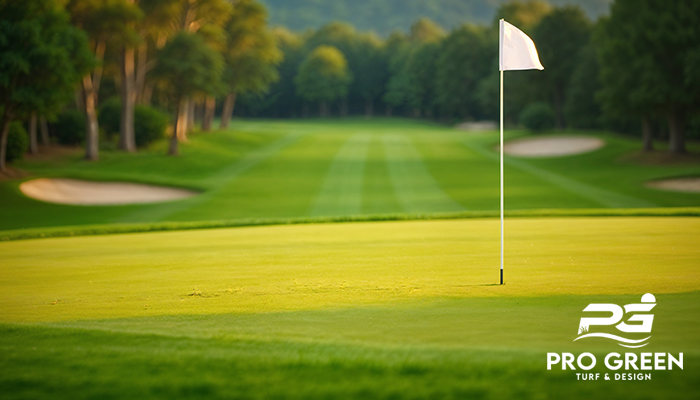
Putting greens use a very short, dense pile artificial grass, typically 10 to 15 millimeters in height, with a specialized infill and base design that controls the pace and roll of a golf ball. The surface needs to be consistent, smooth, and true to a precise slope specification. Any variation in compaction or infill depth shows up immediately in ball roll behavior.
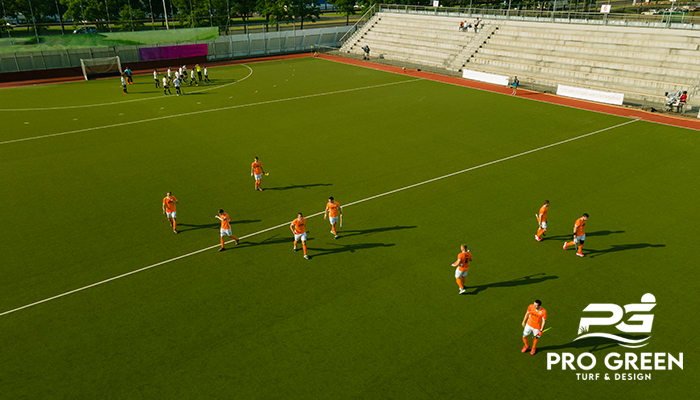
Multi-sport turf fields for soccer, football, and field sports use longer pile heights, typically 40 to 60 millimeters, with a combination of sand and rubber infill that provides the right amount of give underfoot, surface traction, and ball response. The fiber type affects how the surface plays wet, which matters significantly in coastal BC climates with significant rainfall.
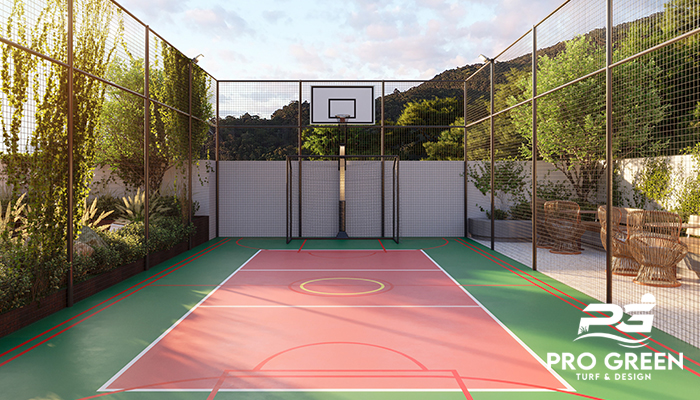
Sports courts for pickleball, tennis, and basketball use different materials entirely. These sports require a hard surface with specific traction characteristics, not a grass-type product. Cushioned acrylic or rubber-based systems provide the shock absorption and surface grip these sports require, and the court dimensions and line specifications are strictly standardized.
Combining multiple sport areas in a single facility means specifying each zone independently and coordinating the transitions between them. This is where planning the project as a whole, rather than surface by surface, produces a better result.
Site Preparation for Synthetic Sports Surface Installation
The base work beneath any synthetic sports surface determines how the surface performs and how long it lasts. This is consistent across all surface types, even though the base specifications differ.
For turf fields, the base typically involves a compacted aggregate sub-base, a drainage layer, and a finished sand or aggregate surface on which the turf is laid. Drainage is critical for outdoor turf fields. A surface that does not drain adequately becomes unusable after rainfall and develops compaction and surface distortion over time.
For hard courts, the base needs to be engineered to a more precise level tolerance than turf areas, because any unevenness in the base transmits directly to the playing surface without the cushioning that turf infill provides. Laser grading to millimeter-level tolerances is standard for quality hard court installations.
Both surface types require adequate drainage connections to handle rainfall runoff. This is a civil engineering consideration that should be part of the design from the beginning, not retrofitted after the surface is already in.
Infill Material and Why It Matters for Turf Surfaces
Infill Material is the material distributed between the blades of an artificial turf surface. It provides weight and stability to the turf fibers, contributes to shock absorption, and affects how the surface performs under athletic use.
Sand-only infill is the simplest approach. It is cost-effective and low-maintenance but provides less shock absorption than composite systems. It is appropriate for lower-use installations and surfaces that do not require FIFA or sports association certification.
Crumb rubber infill, typically recycled from tires, has been the standard for athletic turf fields for decades. It provides good shock absorption and surface resilience. Concerns about heat retention and the composition of recycled rubber have led some clients to explore alternatives.
Organic infill systems using cork, coconut fiber, or other natural materials have grown in adoption for residential and lower-impact applications. They stay cooler than rubber infill and are a natural material, but they have higher maintenance requirements and shorter replacement cycles.
The right infill for a given installation depends on the sport, the use intensity, the client’s priorities around maintenance and sustainability, and in some cases the certification requirements of the sports body governing the use of the facility.
Maintenance Expectations Compared to Natural Grass
Maintenance Expectations Compared to Natural Grass is a key factor, as synthetic sports surface installation is often chosen in part because of reduced maintenance requirements. The comparison is real but needs to be understood accurately.
Natural grass fields require mowing, irrigation, fertilization, aeration, overseeding, and pest management on a regular schedule. The costs and labor involved are ongoing and significant, particularly for high-use fields that need to recover between events.
Synthetic surfaces require less frequent attention but are not maintenance-free. Regular brushing keeps the pile upright and the infill distributed evenly. Debris removal, particularly organic material that can compact in the infill layer, should happen regularly. Infill replenishment is needed over time as material is displaced or degraded. Seam and edge inspections catch issues before they expand.
The total maintenance cost over a 10-year period is generally lower for synthetic than for natural grass at the same use intensity, which is part of why synthetic surfaces have become the standard for high-use school, municipal, and commercial sport facilities.
Partner with Pro Green Turf & Design
At Pro Green Turf and Design, we install synthetic sports surfaces for putting greens, multi-sport turf fields, and hard court applications across the Lower Mainland, Fraser Valley, and beyond. We handle site assessment, base design, surface specification, and installation as a complete service.
If you are planning a sports surface project, we offer free consultations and on-site assessments.
Synthetic Sports Surface Installation: How Requirements Change by Sport and Site
A pickleball court, a putting green, and a
Oct 30, 2026 Oct 08, 2026 Sep 24, 2026 Aug 13, 2026 Jun 22, 2026 Jun 17, 2026 May 06, 2026 Apr 30, 2026 Apr 28, 2026 Apr 27, 2026 Mar 09, 2026 Mar 06, 2026 Feb 27, 2026 Feb 23, 2026 Feb 16, 2026 Jan 19, 2026 Jan 13, 2026 Jan 06, 2026 Dec 22, 2025 Dec 06, 2025 Dec 03, 2025 Nov 29, 2025 Nov 19, 2025 Oct 31, 2025 Sep 29, 2025 Sep 15, 2025 Aug 27, 2025 Jul 16, 2025 Jul 08, 2025 Jun 11, 2025 May 29, 2025 May 14, 2025 Apr 18, 2025 Apr 10, 2025 Apr 02, 2025 Mar 25, 2025 Mar 19, 2025 Mar 10, 2025 Feb 20, 2025 Jan 29, 2025 Jan 28, 2025 Aug 31, 2024 Aug 31, 2024 Aug 31, 2024Categories
Blog
Artificial Green Walls: What They Are Made Of and Where They Actually Work
Concrete Paving Stones Installation: What the Process Looks Like from Ground Up
Pet-Friendly Turf: Solving the Muddy Paw Problem
How Landscaping Transforms Delta Homes
Sports Turf Buyer's Guide: How to Choose, Install & Maintain the Best Athletic Field Surface
Artificial Turf Installation: The Complete Homeowner's Guide to Cost, Process, and Long-Term Success
Which Putting Green Products Are Weather-Resistant for Canadian Climates?
How FIFA-Certified Football Turf Changed the Game — and What It Means for Canada
Basketball Court Dimensions in Canada: Your Complete 2026 Guide
Creating Safer and Smarter Outdoor Spaces for Families
How To Install Fake Turf or Synthetic Turf
How Much Does It Cost to Install a Basketball Court?
What Will Landscaping Cost in Vancouver and Surrey?
Which Landscaping Tools Are Best for Small Residential Yards?
How Much Does It Cost to Install a Pickleball or Tennis Court?
Top 5 Most Common Mistakes You Want to Avoid During Putting Green Installation
How Do I Choose a Reliable Landscaper?
The Cost of Professional Landscaping Installation in Canadian Cities
Where to Find Putting Green Mats with Realistic Texture in Canada?
How to Buy a Portable Putting Green for Indoor Use?
The Best Landscaping Companies Near Me in Canada
Will Landscaping or Putting Green Installation Increase My Property Value?
Top Landscaping Questions We Get Asked By Surrey Homeowners
How Landscaping Services In White Rock Meet The Needs Of Busy Homeowners For Hassle-Free Lawns
Low-Maintenance Landscaping Ideas for Vancouver Homes
DIY Putting Green Installation: Step-by-Step Guide
What You Should Know About Landscaping Services in Langley as A First-Time Homeowner
Big Ideas for Landscaping Services in Delta with Small Yards

Deciding Between Spring and Fall Landscaping Services in Coquitlam
Solving the Problem Yard Microclimates with Landscaping Services in Surrey
The Appeal of Artificial Putting Green Installation for Homeowners!
The Versatility of Landscaping Services in Vancouver

Landscape Ideas in Richmond: What About Upgrading to Turf?

Why You Should Add a Retention Wall to Landscaping in Maple Ridge

Affordable Turf Installation Langley Residents Can Count On!

Landscaping in Delta with Drought-Resistant Plants

Three Reasons Professional Turf Installation Is Worth It
Water Conservation with Turf Installation in Maple Ridge

Building in Vancouver? Here’s Why You Should Consider Turf Landscaping
Landscaping in Coquitlam
How Soil Sets the Foundation for Landscaping in Surrey Homes
Retaining Walls- A Versatile Solution for Landscaping and Property Management
Artificial Turf: A Strategic Investment for Businesses
The Benefits of Installing Artificial Turf for Your Home